
Cooking as a Cognitive and Ethical System
A reference article that examines cooking as a professional practice grounded in scientific knowledge and ethical responsibility. It provides a conceptual frame
Download article PDF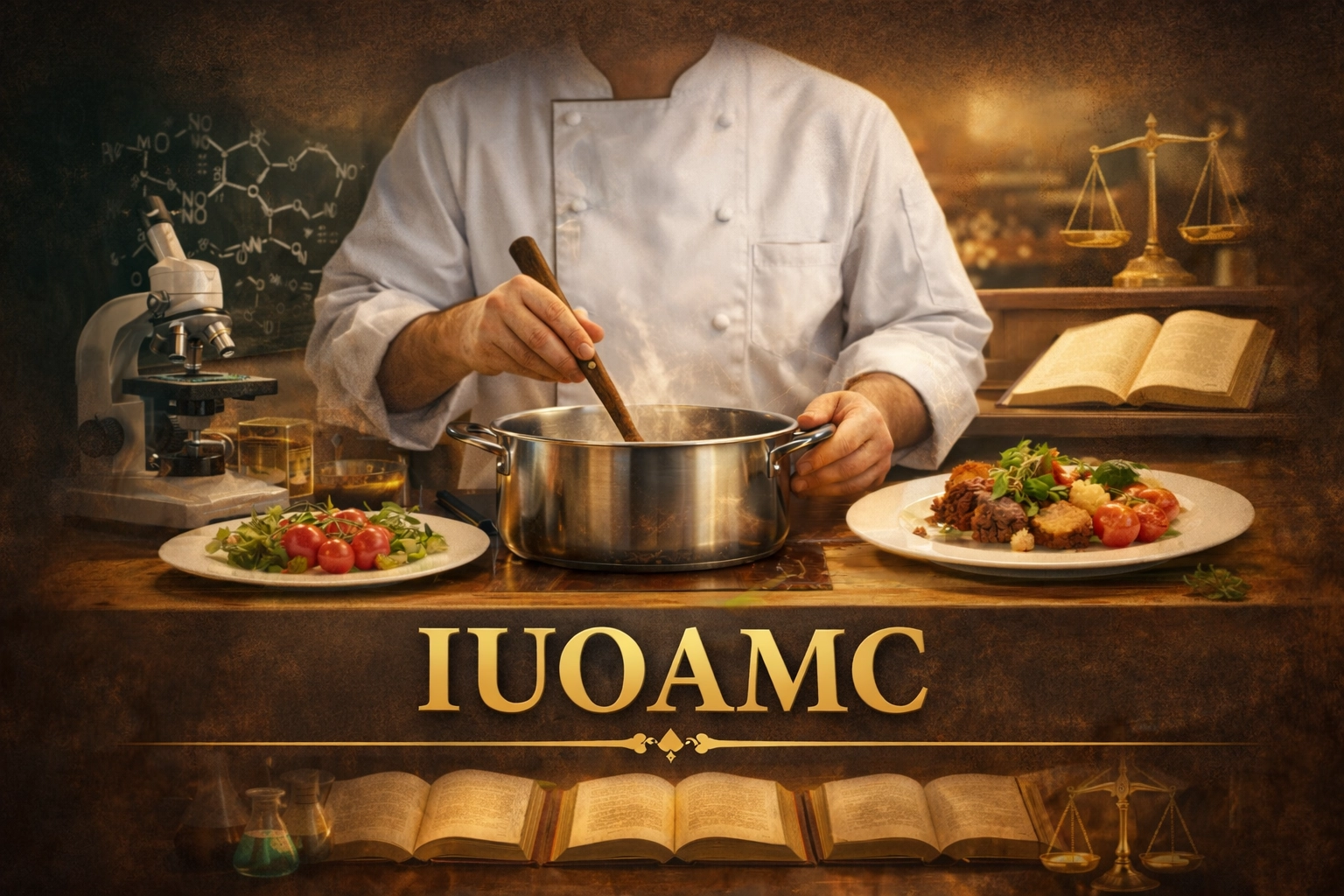
Cooking in the contemporary context is no longer merely a technical activity or a manual craft based on personal taste and individual skill. It has evolved into an integrated cognitive and ethical system in which applied sciences intersect with professional values and human responsibility. Modern professional cooking is grounded in clear scientific foundations, including an understanding of food properties, chemical and physical transformations during cooking, and the impact of heat, time, texture, aroma, and color on final sensory outcomes. It is also closely connected to nutrition science, food safety, and sensory perception, making cooking a knowledge-based practice rooted in analysis, comprehension, and accumulated expertise rather than improvisation or imitation.
Alongside this cognitive dimension, cooking carries a fundamental ethical dimension, as it directly affects human health, dietary behavior, and cultural awareness. Every dish presented represents an implicit professional commitment to quality, safety, and honesty. Any breach of these principles constitutes an ethical failure before it is a technical one. Professional culinary ethics include strict adherence to hygiene and safety standards, transparency in the use of ingredients, avoidance of consumer deception, respect for food resources, and rejection of waste or distortion of culinary identity for superficial appeal.
Within this framework, creativity in cooking becomes a disciplined concept governed by knowledge and responsibility, not an unregulated practice that exceeds professional boundaries. Genuine culinary creativity does not contradict standards; rather, it emerges from them and contributes to their evolution. The absence of a clear reference framework leads to professional disorder, where innovation is confused with reckless experimentation. A sound reference framework balances artistic freedom with scientific rigor, granting chefs ethical and cognitive legitimacy in education, evaluation, and adjudication.
Recognizing cooking as a cognitive and ethical system enhances the quality of culinary education, strengthens evaluation and judging mechanisms, and builds public trust in the profession and its practitioners. It also redefines cooking as a conscious human act in which skill and values, knowledge and responsibility, are fully integrated—establishing culinary practice as a sustainable professional discipline with lasting cultural, health, and social impact.
Prepared by:
Chef Ahmad Maadarani
President General, International Union of Arab Master Chefs
International Judge in Culinary Arts and Gastronomy
Researcher and Author in Culinary Philosophy and Professional Standards